

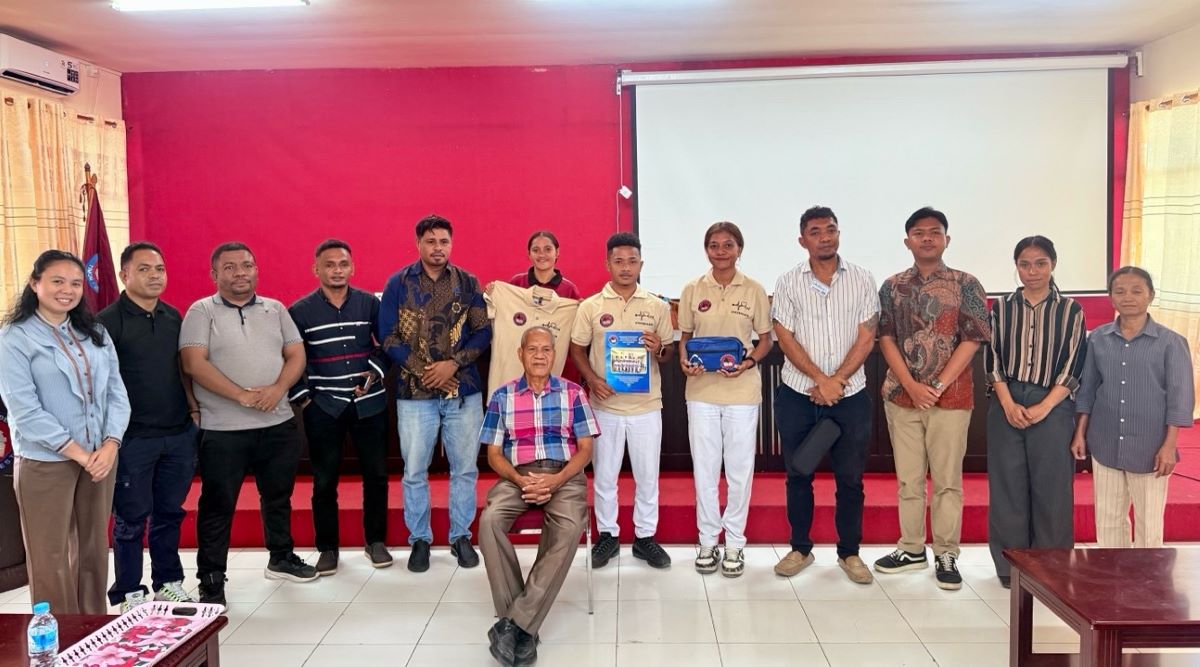
Dili, Timor-Leste (UNAND) - A two-week international community service mission led by Rezky Fauzan, doctoral student from the Biomedical Sciences Study Program at Universitas Andalas (Unand) started in Timor-Leste on January 12, 2026. The initiative, implemented under the EQUITY Outbound Program in partnership with Universidade Dili and supervised by Prof. dr. Nur Indrawaty Lipoeto, M.Sc., Ph.D., Sp.GK(K)., delivered hands-on training aimed at strengthening local capacity to assess and address childhood malnutrition. The program combined classroom instruction with supervised field practice, providing practical experience in anthropometric assessment, nutritional screening, and community education.
Timor-Leste continues to face elevated rates of stunting and other forms of undernutrition, compounded by a shortage of trained nutrition specialists outside urban centers. In response, the Unand doctoral student and team from Universidade Dili conducted capacity-building sessions for local nurses as well as nursing and public health students. They equipped participants to perform accurate height-for-age and weight-for-age assessments, interpret results, and counsel caregivers on basic nutrition and feeding practices. Emphasis was placed on practical, low-cost methods adaptable to resource-limited settings. These included simplified anthropometric measurement techniques, community-friendly explanations of growth charts, and strategies for linking at-risk families to local health services.
The deployment aligns explicitly with several United Nations Sustainable Development Goals. By prioritizing the reduction of child undernutrition and improving maternal and child health services, the program supports SDG 2 (Zero Hunger) and SDG 3 (Good Health and Well-being). The educational components, including public lectures, skills training, and the development of locally adaptable teaching materials, contribute to SDG 4 (Quality Education) by strengthening human resources for health. Finally, the partnership model between Unand, Universidade Dili, and local health facilities exemplifies SDG 17 (Partnerships for the Goals). It fosters cross-border collaboration and knowledge exchange that can be scaled and sustained.
Dili was selected as the locus for this international community service for several pragmatic and strategic reasons. As the national capital and seat of major educational and health institutions, Dili offers critical access to academic partners, clinical sites, and a concentration of future health professionals. At the same time, its proximity to underserved peri-urban and rural districts makes it an effective base for outreach into communities where service gaps are most acute. The existing institutional relationship with Universidade Dili and expressed needs from local health authorities made Dili a natural choice for a pilot deployment designed to combine academic exchange with tangible community impact.
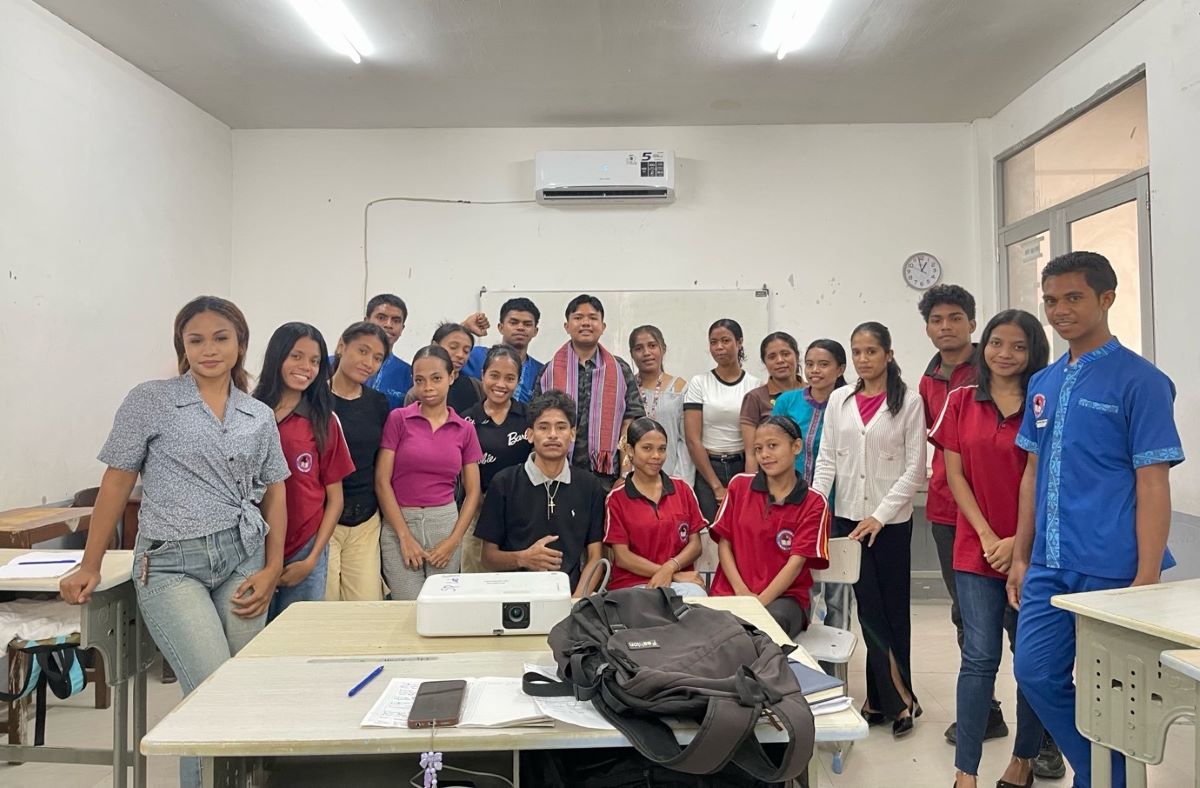
Central to the visit was a series of public lectures and workshops hosted at Universidade Dili. These sessions covered core topics in nutrition science and public health practice inlcuded fundamentals of human nutrition, principles and protocols for nutritional status assessment, social and environmental determinants of malnutrition, and practical tips for robust field data collection. The curriculum emphasized standardization of measurement techniques, ethical considerations and informed consent in community research, methods for minimizing measurement error in low-resource settings, and pragmatic approaches to caregiver communication. Sessions blended didactic lectures with hands-on demonstrations, role-plays, and small-group exercises so that students left with immediately applicable skills. As a demonstration of sustained commitment, program participants accompanied a general nursing department team during community service activities in five villages across the Vemasse subdistrict. These field activities allowed trainees to apply classroom learning under supervision while contributing direct services to vulnerable families.
Beyond program delivery, participants engaged with the Indonesian Embassy in Dili, meeting with the cultural and education attaché to discuss future cooperation. Embassy representatives and the Unand delegation expressed mutual hope that this mission will serve as a first step toward deeper institutional ties. These could include student exchanges, joint research projects, scholarship pathways, and coordinated capacity-building initiatives.
Funded by the Indonesian Endowment Fund for Education (LPDP) on behalf of the Indonesian Ministry of Education, Culture, Research, and Technology and administered under the EQUITY Program (Contract No. 4304/B3/DT.03.08/2025), the deployment is positioned as the first phase of a longer-term engagement. Planned next steps include follow-up training modules for local trainers, collaborative research on community nutrition outcomes, and development of a monitoring framework to evaluate the lasting impact of the training on stunting rates and service delivery.